ANSO-MAS 2026: The 2nd Conference on
Environmental Hazards in Asia - Building
Resilience to Future Hazards
Ulaanbaatar, Mongolia - July 28-30th 2026
Future environmental hazards demand more than isolated solutions. They require bold, multidisciplinary action. Resilience begins with research that asks the right questions and provides leaders with insights to protect lives and livelihoods. But science alone is not enough. Effective strategies must grow from local communities, and education must empower every generation to adapt and thrive.
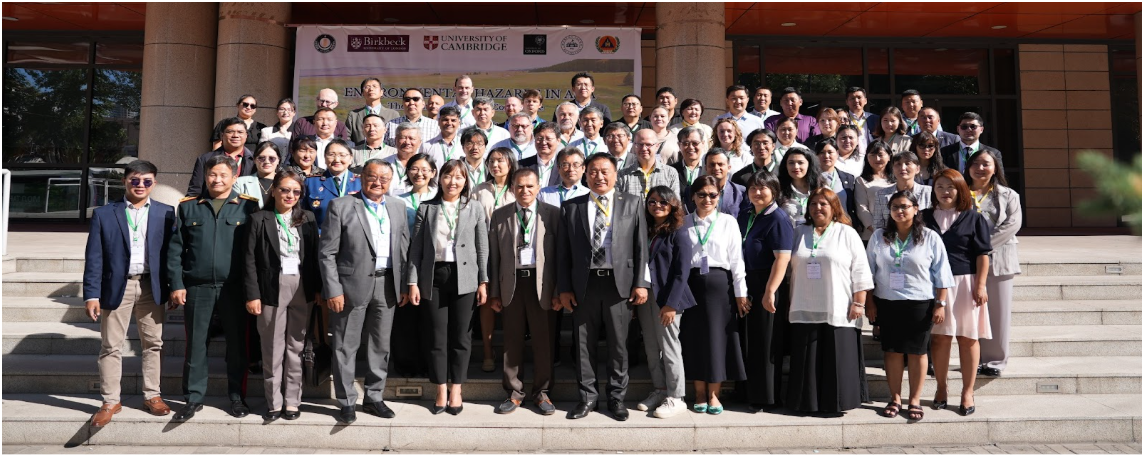
These were the key takeaways from the first Environmental Hazards Conference held in Ulaanbaatar, Mongolia in 2024. Now we take the next step: uniting academia, industry, governments, and NGOs to launch transformative research projects across Asia that strengthen resilience to future hazards and the changing climate. Participants will engage in a 4-day conference and workshops in Ulaanbaatar, Mongolia from July 28–30, 2026. An optional, immersive field trip will follow from July 31-August 4.
This year, we will also explore how the latest space and satellite technologies, ground-based geophysical instrumentation, and data-driven AI analytics can work together as technology for good. These tools will help turn innovation into tangible impact for communities on the frontlines of environmental hazards.
We invite participants from academia, industry, government, and non-governmental organizations, and we particularly welcome participants from across Asia at all career stages. Addressing environmental hazards requires the integration of diverse disciplines and perspectives, as well as collaboration with industry, governments, diplomats, and other stakeholders in designing and implementing research projects. Together, we will connect disciplines, harness technology, and develop solutions that work in real-world settings. This conference is designed to support both dialogue and action, with dedicated spaces for collaboration and the co-creation of proposals that drive lasting change.
LET’S BUILD THE FUTURE OF RESILIENCE TOGETHER.
Planned Sessions include:
- Environmental Hazards in Asia - What are the environmental hazards facing countries across the region. A chance to share current research and identify common themes.
- Technological opportunities & Challenges to Disaster Risk Reduction and Disaster Management - What are the current and near-future solutions to sustainable development from science, engineering and technology? How can new technologies (e.g., satellites, new sensors), AI and machine learning provide solutions, and what areas may it have negative impacts. How can the lessons learned from successful and less successful implementation in some countries be adopted and modified to benefit others?
- Wider implications of environmental hazards - What are the wider impacts of environmental hazards? How do hazards impact the health and well-being of wider society? How can we effectively mitigate against the immediate and long-term impacts of environmental hazards?
We will also have space for more technical talks and posters. We will develop these themes based on abstracts submitted, but are also open to suggestions from the community. Some ideas include:
- Earthquakes and large cities
- Climate Induced Hazards
- Land degradation in a changing climate
- Engaging local communities for resilient solutions
Please see the links to the left for registration details and key dates.
Registration & Field Trip Fees *Note: All fees will be collected on site.
Registration fee: 30$
~Conference registration is required for all participants. The registration fee covers access to all conference sessions, conference materials, coffee breaks, and a lunch box.
Field trip fee: 100$
~An optional field trip will be held from July 31-August 4, 2026, visiting selected sites relevant to environmental hazards and resilience in Mongolia. The field trip fee covers transportation, meals, and accommodation.
Travel Support
We have received sponsorship from ANSO (The Alliance of National and International Science Organisations for the Belt and Road Regions) to support travel and accommodation for at least 20 participants from across Asia. Priority will be given to researchers from low- and middle-income countries as defined by the OECD. To receive this support, applicants must have submitted an abstract and be prepared to give an oral presentation at the conference. To apply, please complete the application form here. The deadline for applications is 1st May 2026.
We are currently seeking additional sponsors for the meeting. If you think your organization would be interested in supporting this conference, please contact us.
Contact us: conference@iag.ac.mn